Volume Patterns Across Multiple Betting Markets Signal Undervalued Wagers in International Cricket
Written by Ines Perry · Aug 14, 2026

Volume Patterns Across Multiple Betting Markets Signal Undervalued Wagers in International Cricket
Cross-market volume signals emerge when betting activity on one platform diverges sharply from patterns observed on another, and these discrepancies often highlight wagers where odds have not yet adjusted to underlying interest levels. Data from exchanges and sportsbooks show that liquidity spikes in player performance markets frequently precede shifts in match-winner odds, creating windows where certain outcomes carry higher expected value than current pricing suggests. Observers tracking these flows note consistent patterns across major tournaments including the Indian Premier League, Pakistan Super League, and Big Bash League.
How Volume Discrepancies Develop in Cricket Markets
Betting markets for cricket operate across numerous categories such as match totals, individual batsman runs, bowler wickets, and team win probabilities, yet volume does not distribute evenly at all times. When substantial money enters a niche prop market first, the movement can indicate informed interest that has not yet reached broader lines, and this lag produces opportunities for those monitoring multiple books simultaneously. Research indicates these imbalances appear most often during powerplay overs or death bowling segments where statistical variance remains high and public attention stays concentrated on headline markets.
Exchanges provide real-time order book depth that sportsbooks rarely match, allowing volume spikes to surface earlier in one venue than another. Those who study these differences find that a sudden increase in matched bets on a specific over/under total often correlates with subsequent line adjustments elsewhere, yet the delay between the two can last several minutes to hours depending on the league and time of day. In August 2026, ongoing Caribbean Premier League fixtures demonstrated repeated instances where early volume on run-rate props preceded adjustments in full-match totals across multiple operators.
Practical Application Across International Leagues
Analysts examining IPL and PSL data sets report that cross-market volume works most effectively when comparing in-play liquidity against pre-match positions. A surge in bets on a particular opening partnership total, for example, can foreshadow adjustments in first-innings run lines once that information reaches slower-moving books. Figures from industry reports reveal that such signals appear more frequently in T20 formats than in longer 50-over contests because shorter games generate higher turnover per minute and therefore faster information transfer between platforms.
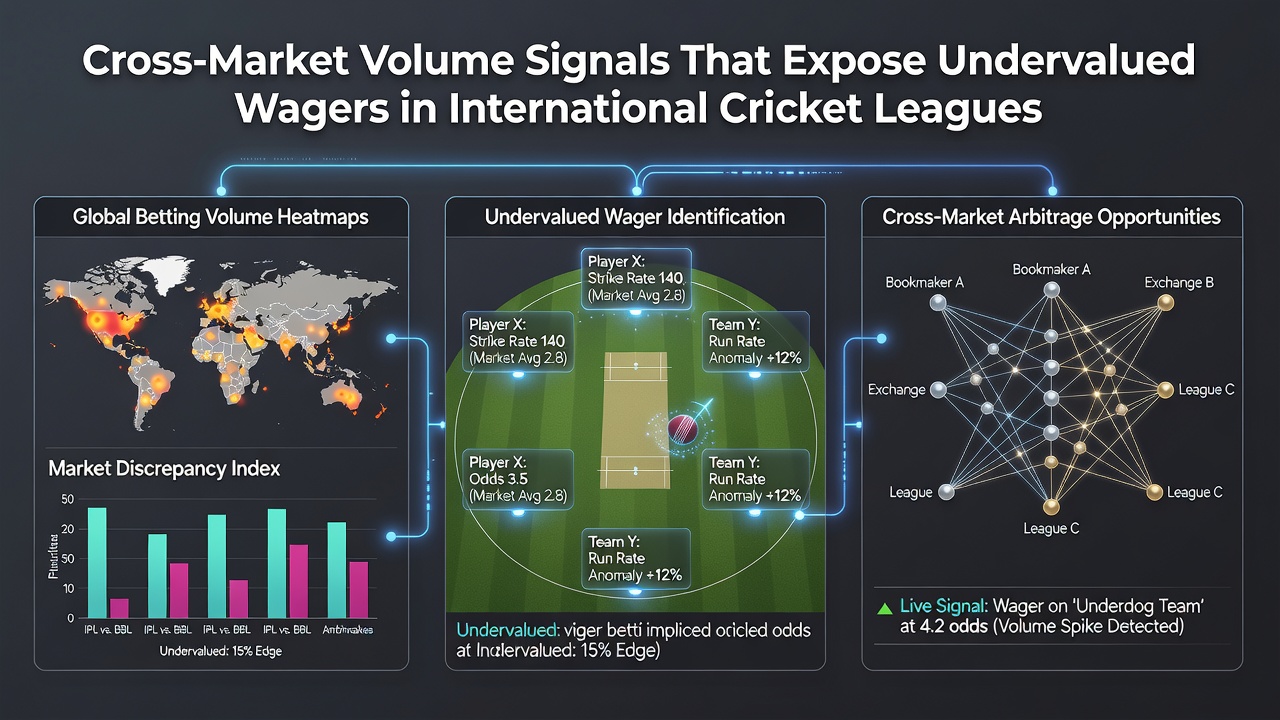
Traders who monitor both Asian and European books simultaneously observe that volume originating from one region sometimes travels slowly to another due to time zone differences and regulatory restrictions on certain bet types. This geographic lag creates measurable edges when a high-volume market in one jurisdiction has not yet influenced pricing available elsewhere. One documented case during the 2025-26 Big Bash season showed early liquidity on a bowler wicket prop in Australian exchanges preceding line moves on the same outcome at international sportsbooks by nearly forty minutes.
Tools and Data Sources Supporting Volume Analysis
Software platforms that aggregate order flow across exchanges supply the raw data needed to identify these signals, while supplementary statistics from cricket governing bodies supply context on player form and pitch conditions. According to Australian gambling research reports, volume-based indicators gain reliability when combined with historical performance metrics rather than used in isolation. Similar findings appear in studies published through the Journal of Sports Economics, which examined liquidity patterns across multiple cricket competitions and confirmed measurable delays between market segments.
Those tracking volume note that certain leagues produce cleaner signals than others. Domestic T20 competitions with established player pools tend to show clearer discrepancies because betting interest concentrates on familiar names, whereas bilateral international series sometimes distribute volume more evenly across all available markets. The pattern holds across recent seasons, with data indicating stronger predictive value during league stages compared with knockout matches where public bias toward favorites increases.
Conclusion
Cross-market volume analysis provides a structured method for identifying potential value in international cricket betting by highlighting liquidity differences that precede price adjustments. The approach relies on observable data flows rather than subjective judgment, and its effectiveness increases when applied consistently across multiple tournaments and formats. Continued monitoring of these signals through 2026 and beyond will depend on access to real-time exchange data combined with reliable cricket performance statistics.