Spin Rate Anomalies Creating Fresh Angles for MLB Strikeout Prop Bettors
Written by Carlo Krüger · Jul 10, 2026
Spin Rate Anomalies Creating Fresh Angles for MLB Strikeout Prop Bettors
Spin rate data has long influenced how analysts evaluate pitchers yet recent anomalies have started to shift the way strikeout proposition markets behave across Major League Baseball. Pitchers who once posted consistent revolutions per minute now display unexpected fluctuations and these variations directly affect their ability to generate swings and misses. Observers note that teams and data providers track these metrics in real time while prop markets adjust odds based on historical patterns that no longer align with current readings.
Understanding Spin Rate and Its Role in Strikeouts
Spin rate measures how fast a baseball rotates after release and higher figures typically produce sharper movement that fools hitters into missing the ball. Data from the 2025 season through early July 2026 reveals clusters of pitchers whose spin rates deviated by more than 150 revolutions per minute from established baselines and these shifts correlate with changes in strikeout percentages. Researchers at academic institutions have documented that even modest drops in spin can reduce whiff rates by several percentage points while unexpected increases sometimes boost strikeout totals beyond what traditional scouting reports predicted.
Equipment monitoring and league-wide testing protocols introduced after the 2023 season continue to influence these numbers and July 2026 updates from pitch tracking systems show that certain ball batches produce different aerodynamic responses. Those who study the sport point out that the anomalies appear across multiple divisions rather than remaining isolated to a single team or stadium and this widespread pattern forces oddsmakers to recalibrate strikeout props more frequently than in previous years.
How Anomalies Alter Prop Market Dynamics
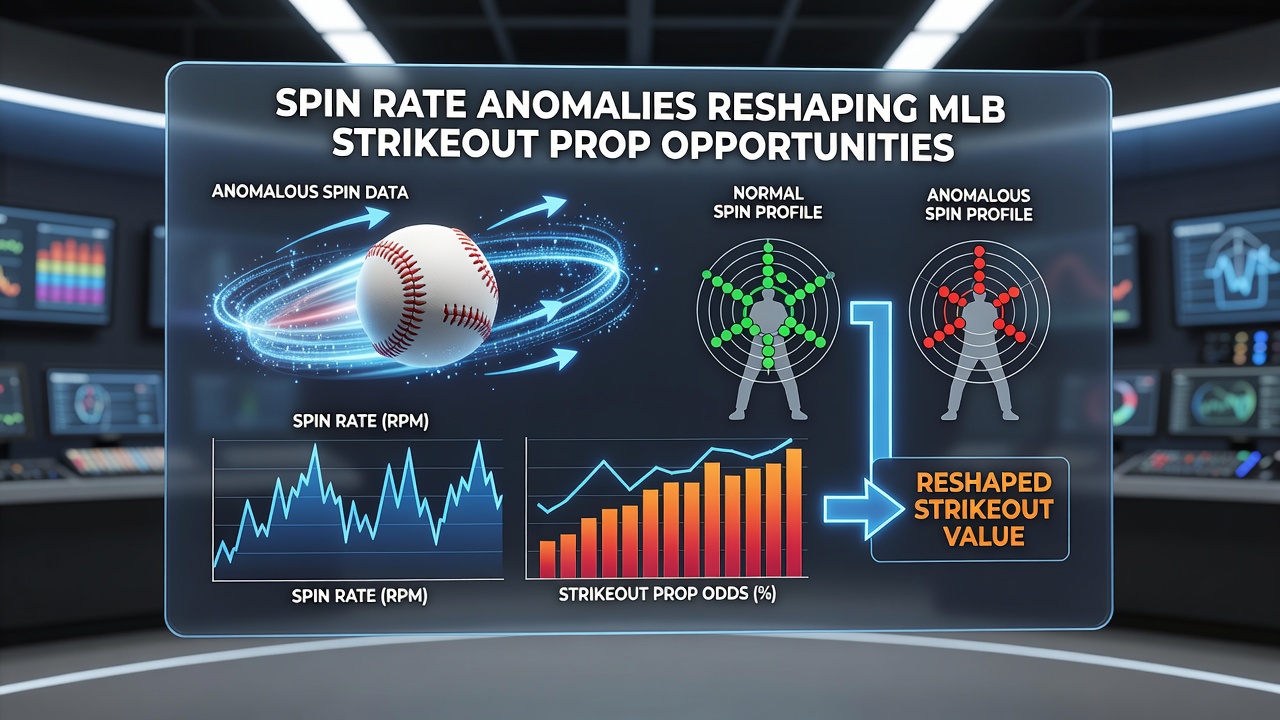
Strikeout props rely on expected strikeout totals derived from pitcher tendencies and opponent matchups yet spin rate deviations introduce new variables that markets must absorb. When a starter's spin rate spikes mid-season without corresponding changes in velocity or pitch mix the implied probability of recording six or more strikeouts can rise sharply and lines move accordingly. Conversely pitchers experiencing unexplained drops in spin often see their strikeout props priced lower even when facing weaker lineups and sharp bettors who monitor these metrics identify value before lines fully adjust.
Analysts at industry organizations have compiled season-long datasets that link specific spin rate thresholds to strikeout outcomes and these findings circulate among professional handicappers who integrate the information into their models. One case study from the first half of 2026 involved a National League right-hander whose four-seam spin rate climbed 200 revolutions per minute after a mechanical adjustment and his strikeout prop overs hit at a 68 percent clip over the subsequent eight starts compared with 42 percent earlier in the campaign.
Tools and Data Sources Driving Edge Identification
Advanced pitch tracking platforms now publish spin rate readings within minutes of each inning and this speed allows prop bettors to cross-reference live data against pregame lines. Several organizations release weekly reports that flag pitchers whose current spin metrics differ significantly from their three-year averages and these alerts help identify games where strikeout totals may exceed or fall short of market expectations. Academic papers published through university sports science departments further examine how grip pressure and seam orientation interact with league-approved baseballs to produce the observed anomalies.
According to figures released by Major League Baseball's analytics division the average four-seam spin rate across qualified starters rose 37 revolutions per minute between April and July 2026 while certain pitchers recorded swings exceeding 300 revolutions. Such outliers create situations where historical strikeout props require fresh evaluation because past performance data no longer captures present-day movement profiles.
Regional Variations and Cross-Market Implications
Ballparks in different regions exhibit varying effects on spin retention due to altitude and humidity and these environmental factors compound the anomalies already present in the baseball supply. Bettors who follow multiple sportsbooks notice that lines on the same pitcher can differ by half a strikeout depending on which market absorbs the latest spin data first. A study coordinated through Canadian sports research groups highlighted how thinner air at higher elevations preserves spin longer and this preservation sometimes inflates strikeout projections for visiting pitchers accustomed to sea-level conditions.
Those monitoring international player development pipelines observe that prospects transitioning from other leagues bring distinct spin signatures that require additional time to stabilize in MLB environments. July 2026 data shows several rookies whose initial spin rates fluctuated before settling into ranges that either boosted or suppressed their strikeout prop viability and teams have adjusted scouting reports accordingly.
Conclusion
Spin rate anomalies continue to reshape strikeout prop opportunities as data providers and markets respond to measurable deviations from established norms. Pitchers displaying sustained changes in revolutions per minute generate outcomes that diverge from historical averages and those who track these metrics gain access to updated probability assessments. Continued monitoring through July 2026 and beyond will determine whether the current wave of fluctuations represents a temporary adjustment period or a longer-term shift in how strikeout props are priced across the league.