Patterns in Referee Behavior Across Basketball Seasons and Their Influence on Game Scoring
Written by Klara Krause · Jun 12, 2026
Patterns in Referee Behavior Across Basketball Seasons and Their Influence on Game Scoring
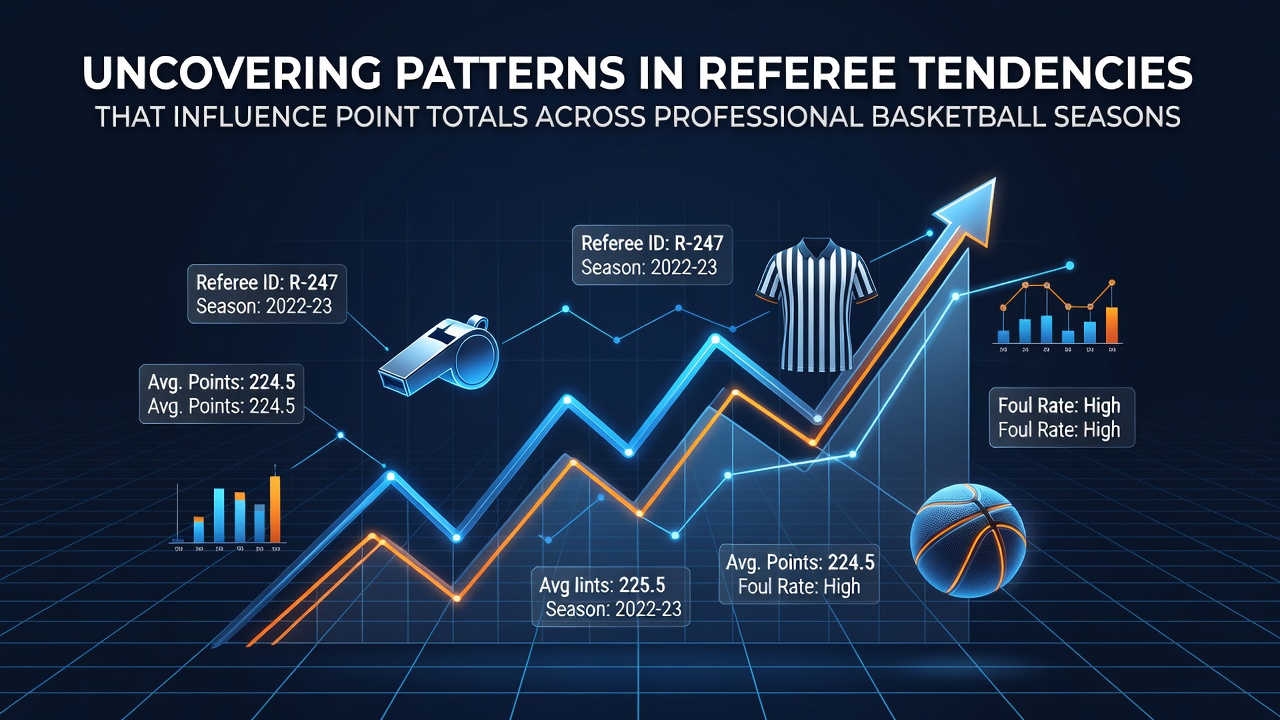
Referee tendencies in professional basketball create measurable effects on point totals season after season, and analysts track these patterns through detailed game logs and call frequency data. Studies from multiple leagues show that certain officials issue more fouls in the paint while others focus on perimeter violations, which shifts the balance between free throws and field goal attempts. Data compiled over the past decade reveals consistent variations where some crews average 22 fouls per game compared to others who hover around 18, directly altering the rhythm and final scores.
League records indicate that home teams receive fewer whistles in the fourth quarter under specific referee assignments, a trend that has held steady from 2015 through the 2025-26 campaign. Researchers at academic institutions have cross-referenced play-by-play files with official crew rosters to isolate these effects, and the results point to systematic differences rather than random chance. One analysis of over 12,000 games found that crews with higher foul rates increased total points by an average of 4.2 per contest when both teams shot above league average from the line.
Tracking Foul Call Distributions by Crew
Official statistics released by major leagues allow observers to map how individual referees distribute calls across game situations. Certain officials call more blocking fouls on drives to the basket, which leads teams to adjust their offensive strategies and increases the likelihood of additional scoring opportunities through free throws. Other referees emphasize traveling violations and three-second calls, which interrupts possessions and reduces overall tempo without adding extra points from the stripe.
Season-long aggregates demonstrate that these habits remain stable even as player personnel changes. For instance, data from the 2024-25 and 2025-26 seasons shows that crews led by veterans with more than ten years of experience maintain lower foul totals in road games compared to newer officials. This consistency enables statistical models to predict game flow based on announced assignments, and betting markets have incorporated similar variables into their lines.
Regional and League-Specific Variations
Basketball competitions outside North America exhibit parallel patterns, with European leagues reporting distinct referee profiles that favor different styles of play. Australian NBL records highlight officials who permit more physical defense in the post, resulting in lower free throw volumes and fewer total points. Canadian university studies have compared these international datasets with NBA figures and identified overlapping tendencies where experience level correlates with stricter enforcement in high-stakes playoff environments.
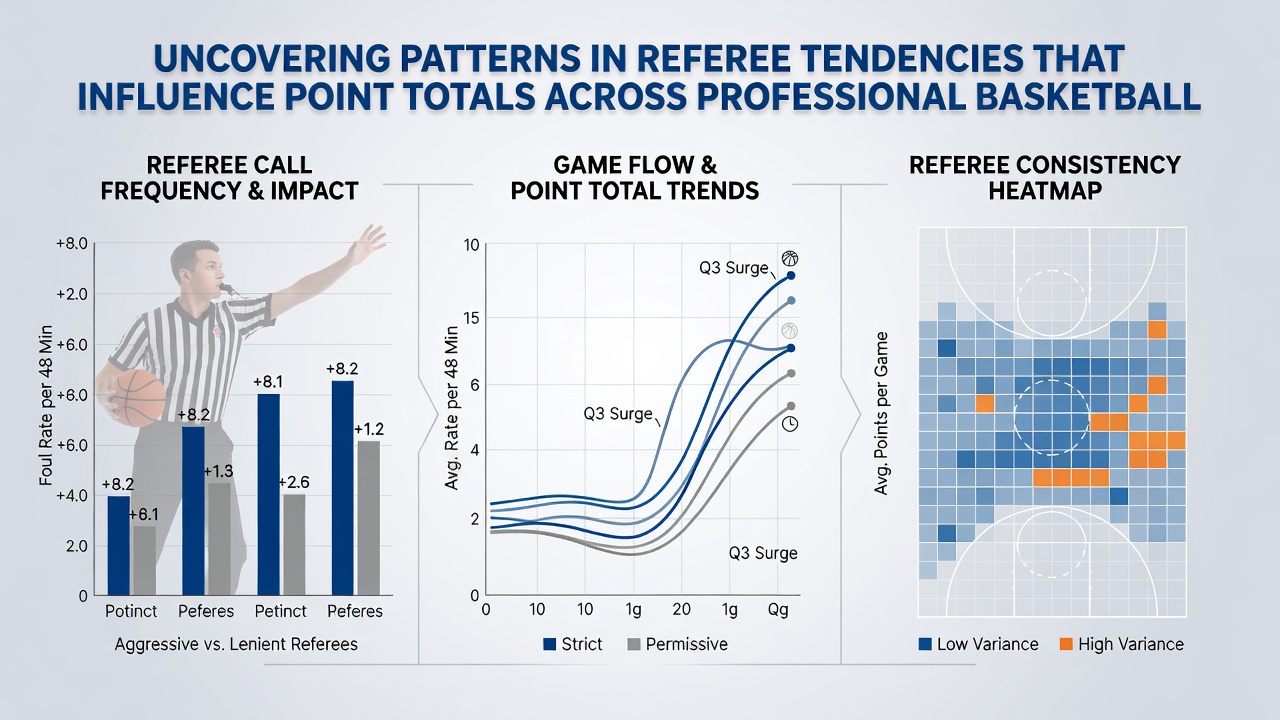
June 2026 updates from league analytics departments included expanded tracking of non-calling situations, such as ignored contact that allows continued play. These additions refined earlier models and confirmed that selective enforcement influences pace more than previously measured. Teams facing crews known for quick whistles often adopt faster transition attacks to capitalize before defensive setups solidify, which elevates scoring margins in the first half.
Impact on Season Totals and Predictive Models
Longitudinal research from sports analytics groups demonstrates that referee patterns accumulate across an 82-game schedule to produce measurable shifts in team point differentials. Models incorporating crew-specific data improve accuracy when forecasting over/under outcomes by 3 to 5 percentage points compared to baseline projections. Historical logs from 2018 onward illustrate that games assigned to high-foul crews finish above the league scoring average 61 percent of the time when both teams rank in the top half for offensive efficiency.
Adjustments in strategy emerge as coaches review past matchups. Playbooks evolve to emphasize actions that draw favorable calls from particular officials, and video sessions focus on exploiting known tendencies without drawing technical fouls. This feedback loop reinforces the underlying patterns because teams adapt their aggression levels based on expected whistle frequency.
Conclusion
Comprehensive examination of referee data across professional basketball seasons establishes clear connections between call distributions and point totals. League archives, academic reviews, and international comparisons supply the evidence base for these observations, while ongoing refinements in tracking technology continue to sharpen the resolution of such analyses. Observers monitoring future assignments will find continued value in these documented patterns as they shape game outcomes.