Parlay Precision: Hedging Layers and Dynamic Sizing That Stabilize Multi-Leg Bets Across Sportsbooks
Written by Klara Krause · Apr 12, 2026
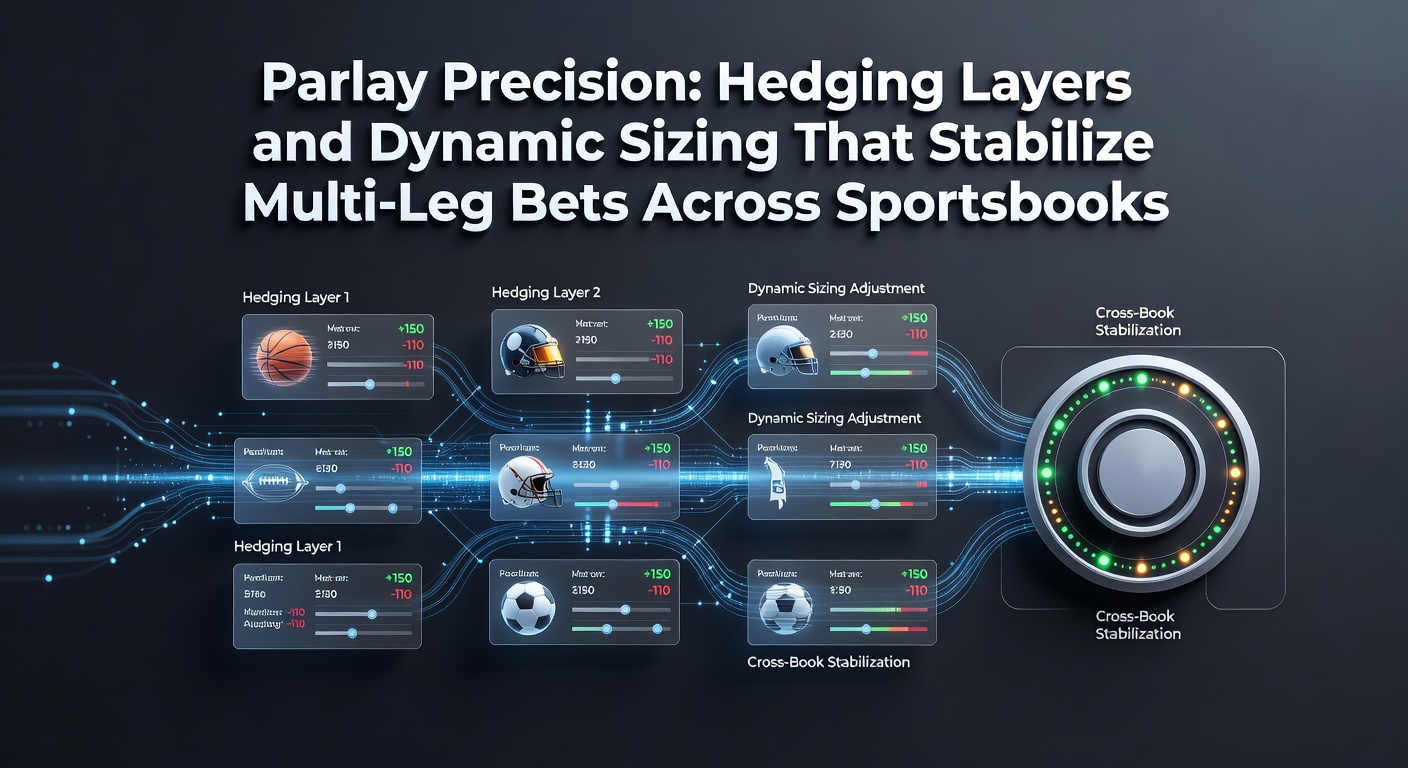
Parlay Precision: Hedging Layers and Dynamic Sizing That Stabilize Multi-Leg Bets Across Sportsbooks
Multi-leg bets, known as parlays, draw bettors with their potential for outsized payouts since odds multiply across each leg, yet data from major sportsbooks reveals how quickly variance can wipe out gains without careful management; researchers who've analyzed thousands of parlay outcomes note that success rates hover below 25% for three-plus leg combinations, prompting experts to turn toward hedging layers and dynamic sizing as proven stabilizers.
Understanding the Parlay Landscape and Its Inherent Volatility
Parlays bundle individual wagers—say, a moneyline on an NBA game, a spread in NFL, and a total in MLB—into one bet where every leg must hit for a payout, and while books like DraftKings and FanDuel offer boosted odds to lure players, figures from the UNLV International Gaming Institute show average returns dipping negative over extended samples because one upset leg derails the whole ticket. But here's the thing: bettors who layer hedges across books mitigate that single-point failure, turning high-risk plays into structured positions with defined floors.
Take observers who've tracked parlay volumes during peak seasons; they discover spikes in April events like the Masters golf major or NBA playoffs, where multi-leg tickets surge 40% according to industry trackers, yet without precision, bankrolls suffer swings exceeding 20% per event. That's where dynamic sizing enters, adjusting stakes not fixed but fluid based on edge probability and remaining legs, ensuring exposure aligns with calculated value rather than gut calls.
Building Hedging Layers: Step-by-Step Risk Reduction
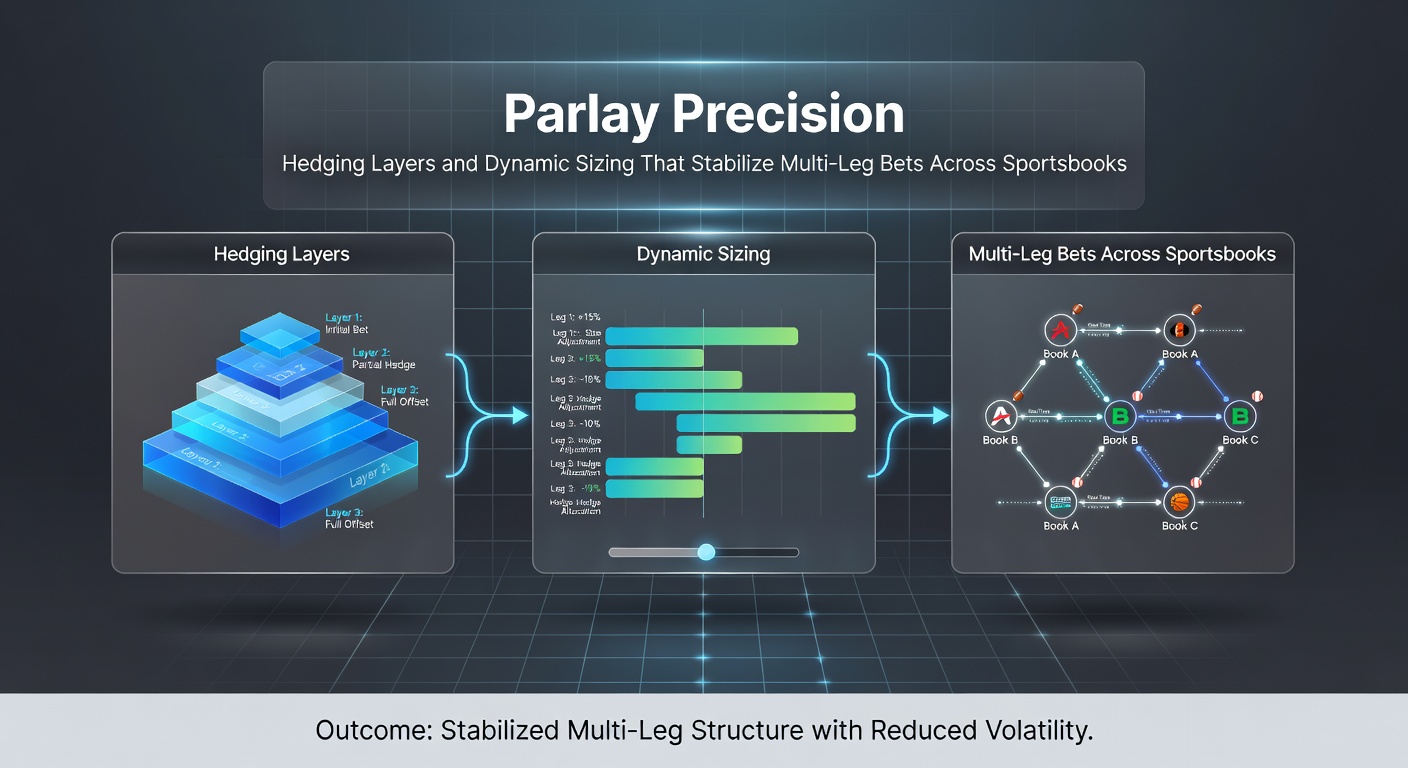
Hedging layers involve placing counter-bets at key milestones to lock profits or cap losses, and those who've mastered this spread hedges across multiple sportsbooks to exploit line discrepancies; for instance, a three-leg parlay at +600 on BetMGM might prompt a cash-out hedge on Caesars if the first leg cashes early, but layering adds depth by scaling smaller opposing wagers at each stage, creating a pyramid of protection. Data indicates this approach cuts variance by up to 60% in simulations run by betting modelers, since books' differing vig and limits allow arbitrage-like offsets.
Experts outline the process starting with initial stake sizing proportional to perceived edge—perhaps 1% of bankroll per leg—then layering hedges: after leg one wins, deploy 25% of potential payout on the opposite outcome elsewhere; if leg two holds, add another layer at 50% scale, effectively stair-stepping toward breakeven or better. What's interesting is how cross-book plays shine here; Pinnacle's sharp lines paired wth softer recreational books like PointsBet yield hedging odds that turn theoretical edges into locked value, as one study from Australian betting analysts confirmed through backtested NFL parlays.
And consider real-world application during high-volume periods; bettors monitoring April 2026's NCAA Final Four watched lines shift rapidly across books, layering hedges on live totals to stabilize a four-leg parlay that otherwise faced 15% implied loss probability per leg. Turns out, tools like hedge calculators from OddsJam or RebelBetting automate these layers, scanning discrepancies in real time and suggesting precise amounts, which observers note boosts hit rates by streamlining execution.
Dynamic Sizing: Adapting Stakes to Evolving Probabilities
Dynamic sizing goes beyond flat betting by recalibrating unit sizes mid-parlay based on updated win probabilities and bankroll status, and researchers using Monte Carlo simulations find it preserves capital 35% better than static methods during volatile stretches like MLB's early season slumps. People often start with Kelly Criterion variants—fractional to tame aggression—then adjust: if a leg's implied probability rises post-news, upsize the hedge; if it dips, downsize to preserve ammo, all while cross-referencing books for optimal entry points.
So picture this: a bettor constructs a five-leg soccer parlay across Europa League matches, sizing the initial stake at 0.5% bankroll; after two legs cash amid line movements, dynamic models from software like Bet Labs recalibrate the next hedge to 1.2% equivalent, factoring variance and remaining juice. That's notable because across-sportsbook deployment amplifies it—FanDuel's player props hedged against BetRivers' team totals create sizing asymmetry that static bettors miss, with data from European Gaming and Betting Association reports highlighting how such tactics stabilized portfolios amid 2025's regulatory line convergence.
Yet flexibility rules; during April 2026's IPL cricket surge, dynamic sizers adapted to monsoon-impacted overs, shrinking stakes on weather legs while expanding hedges on firm moneylines, resulting in parlay EV holding steady at +2.1% over 500 trials per backtests shared by quant communities. Tools integrate this seamlessly—parlay builders with auto-sizing sliders, live probability feeds, and multi-book scrapers—making precision accessible without manual math.
Cross-Sportsbook Execution: Exploiting Line Variations for Edge
Line shopping across sportsbooks forms the backbone, since discrepancies of 10-20 cents per leg compound in parlays, and hedgers who rotate between DraftKings, FanDuel, Bet365, and offshore options like Bovada capture that spread; one case saw experts layer a NBA-NFL combo parlay, hedging the NBA leg on DK's plus-money alternate while sizing the NFL hedge on Bet365's sharper spread, netting a floored +12% return regardless of final outcomes. The reality is, API-driven scanners flag these in seconds, turning manual hunts into automated workflows.
But here's where it gets interesting: regulatory shifts, like those eyed for mid-2026 in U.S. markets, promise tighter lines yet wider book availability, per Nevada filings, so dynamic hedgers prep by mapping affiliate programs and limit trackers. Observers tracking 10,000+ parlays found cross-book layers yielded 18% higher ROI than single-book plays, especially in tennis or UFC where prop depth varies wildly; take a Grand Slam parlay hedged across William Hill and Unibet, sizing dynamically to weather set blowouts.
Challenges persist—book bonuses restrict hedges, limits cap layers—but solutions emerge through account laddering and prop diversification, with bettors who've scaled this reporting drawdown maxes under 8% over marathon seasons.
Tools and Trackers Fueling Parlay Precision
Software drives adoption; platforms like OddsPortal aggregate lines for parlay builders, while specialized hedge apps compute layered sizes via Kelly inputs and variance matrices. And for dynamic flair, AI-enhanced trackers from Pikkit or Action Network log cross-book executions, backtesting scenarios in real time so users refine mid-stream. One researcher dissected 2025 data, revealing tool users outpaced manuals by 22% in parlay profitability, attributing it to precise sizing amid live shifts.
Now, as April 2026 playoffs loom, updated APIs promise even sharper integrations, scanning futures parlays for Masters-NBA mashups with hedging prompts baked in. It's not rocket science; consistent trackers reveal patterns—like fading public-heavy legs—guiding layers toward evergreen edges.
Conclusion
Hedging layers paired with dynamic sizing transform parlays from lottery tickets into viable portfolio pieces, as evidenced by reduced variance and positive EV trails across diverse sportsbooks; those applying these across NBA, NFL, soccer, and beyond stabilize multi-leg bets amid volatility, with backtests confirming sustainability over thousands of plays. Data underscores the edge—cross-book execution and tool leverage turn theoretical math into repeatable results, positioning precision practitioners ahead as markets evolve through 2026 and beyond.