Long-Term Outcome Simulations: Risk Modeling Techniques in Multi-Sport Wagering Portfolios
Written by Carlo Krüger · Jun 26, 2026
Long-Term Outcome Simulations: Risk Modeling Techniques in Multi-Sport Wagering Portfolios
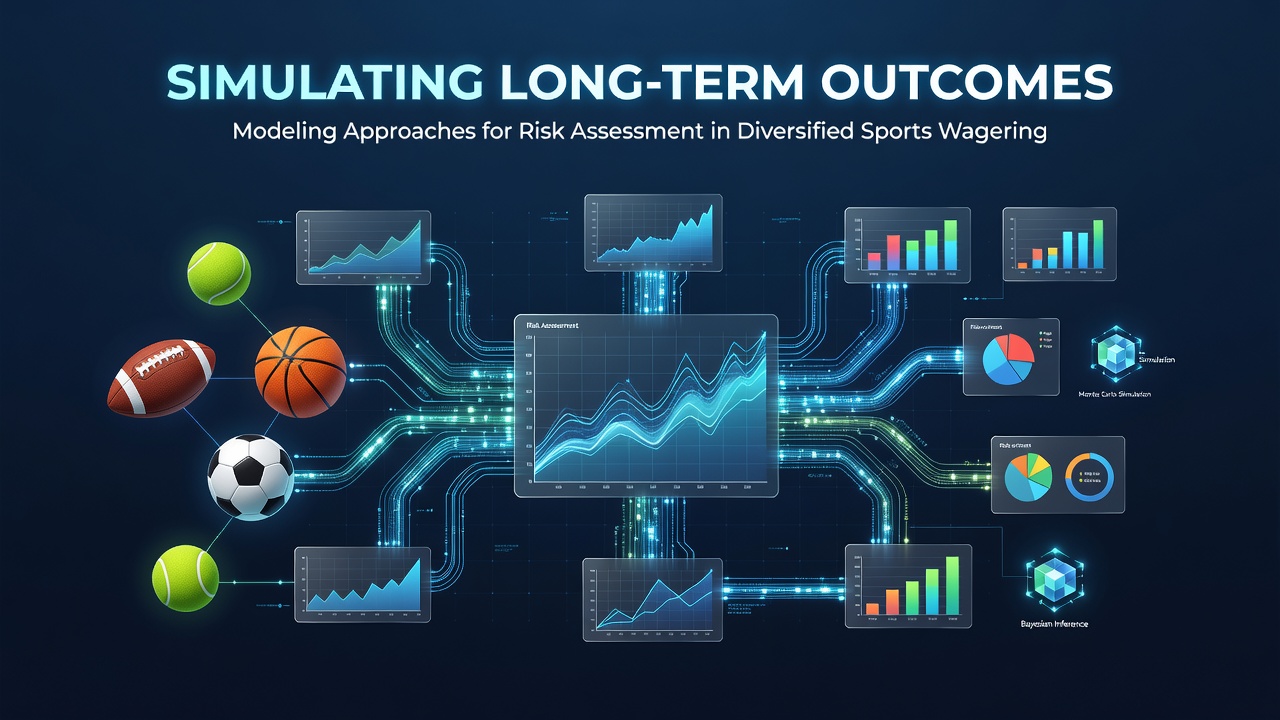
Simulation methods have gained traction among analysts who track diversified sports wagering portfolios because these approaches allow detailed examination of potential results across many scenarios. Researchers apply techniques such as Monte Carlo modeling to generate thousands of possible outcome paths based on historical performance data combined with current market variables. Data indicates that such models help identify exposure levels that single-bet analysis often overlooks, particularly when wagers span multiple leagues, sports, and bet types simultaneously.
Core Modeling Frameworks Used in Practice
Monte Carlo simulations stand out as one of the primary tools because they incorporate random sampling to project forward-looking distributions of returns while accounting for correlations between different markets. Analysts feed these models with inputs including team performance metrics, injury reports, and line movement histories, then run iterations that produce probability ranges for portfolio value at future dates. Studies from academic institutions show that increasing the number of simulations from 10,000 to 100,000 narrows confidence intervals and reveals tail risks that smaller samples miss.
Another approach relies on historical backtesting augmented with bootstrapping methods, where past seasons are resampled with replacement to create synthetic future seasons. This technique proves useful when market conditions remain relatively stable, yet observers note it requires careful adjustment when rule changes or new player cohorts alter underlying probabilities. Regulatory bodies in several regions, including the Australian Communications and Media Authority, have referenced similar analytical standards when evaluating operator risk controls.
Handling Correlations Across Diverse Markets
Diversified portfolios introduce correlation challenges because outcomes in one sport can indirectly influence betting lines in another through shared factors such as weather patterns or scheduling overlaps. Advanced models integrate covariance matrices derived from multi-year datasets to capture these relationships rather than assuming independence. Evidence suggests that ignoring correlations leads to underestimation of drawdown probabilities during clustered losing periods.
Software platforms used by professional betting operations now include modules that automatically calculate rolling correlations and adjust simulation parameters accordingly. One study released by a Canadian research consortium in early 2025 demonstrated that portfolios incorporating live correlation updates reduced maximum drawdown estimates by approximately 12 percent compared with static models.

Stress Testing and Scenario Analysis
Stress testing extends basic simulation by forcing models through extreme but plausible events such as widespread postponements or major line shifts following unexpected news. Scenario analysis then layers additional constraints, including simultaneous adverse results across correlated markets, to measure capital requirements under pressure. Figures released by the European Gaming and Betting Association in June 2026 highlighted increased adoption of these combined methods among operators managing international portfolios.
Those who maintain large wagering operations often schedule quarterly reviews where simulation outputs are compared against realized results, allowing parameter recalibration when systematic biases appear. This iterative process keeps models aligned with evolving market dynamics while maintaining statistical rigor.
Data Requirements and Validation Steps
Accurate simulations depend on high-quality inputs covering both public and proprietary datasets. Performance metrics, closing line values, and volume trends form the foundation, yet analysts also incorporate macroeconomic indicators and sentiment proxies when they demonstrate predictive power. Validation typically involves out-of-sample testing where models trained on earlier periods are evaluated against subsequent seasons to confirm robustness.
Industry reports indicate that organizations achieving consistent calibration maintain separate holdout datasets updated monthly, preventing overfitting to recent anomalies. Such practices align with guidelines issued by oversight bodies in multiple jurisdictions focused on responsible capital allocation.
Conclusion
Simulation-based risk assessment continues to evolve as computational resources expand and data sources multiply. Organizations that integrate Monte Carlo methods, correlation tracking, and ongoing validation produce more reliable projections of long-term portfolio behavior across diversified sports wagering activities. These techniques provide structured ways to quantify uncertainty and support decisions grounded in comprehensive scenario coverage rather than isolated event analysis.