Automating Cross-Border Basketball Arbitrage Detection Systems
Written by Carlo Krüger · Jul 22, 2026
Automating Cross-Border Basketball Arbitrage Detection Systems
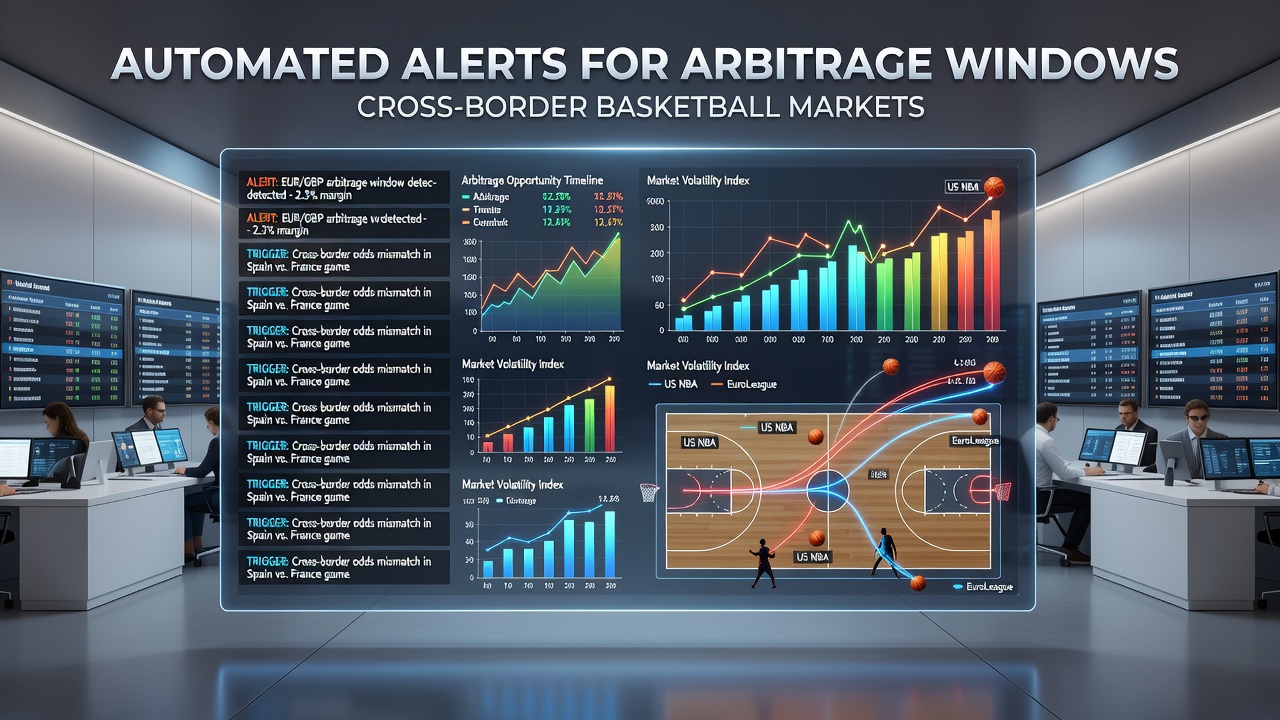
Systems designed to identify arbitrage windows in cross-border basketball markets rely on continuous data feeds from licensed operators in regions such as the European Union, North America, and Asia-Pacific jurisdictions, where point spreads and totals on NBA games or EuroLeague contests frequently diverge due to differences in local liquidity and regulatory frameworks.
Operators in these markets publish odds through APIs that developers integrate into monitoring platforms, allowing algorithms to scan for instances where combined implied probabilities fall below 100 percent and create risk-free profit margins before lines adjust.
Core Components of Alert Infrastructure
Alert infrastructure begins with data aggregation layers that pull live odds from multiple sources, then applies mathematical thresholds to flag qualifying discrepancies. Researchers at institutions tracking global betting volumes have documented how such systems process thousands of price points per minute during peak NBA and FIBA schedule windows, using timestamp synchronization to confirm simultaneous availability across borders.
Notification engines connect to these layers through webhook protocols or dedicated mobile applications, delivering push messages that include stake calculations and exchange rate conversions when cross-currency settlement occurs. Data compiled by the Australian Competition and Consumer Commission on international wagering platforms shows that arbitrage margins in basketball often range between 0.8 and 2.3 percent when European and North American books diverge on player performance props.
Technical Implementation Steps
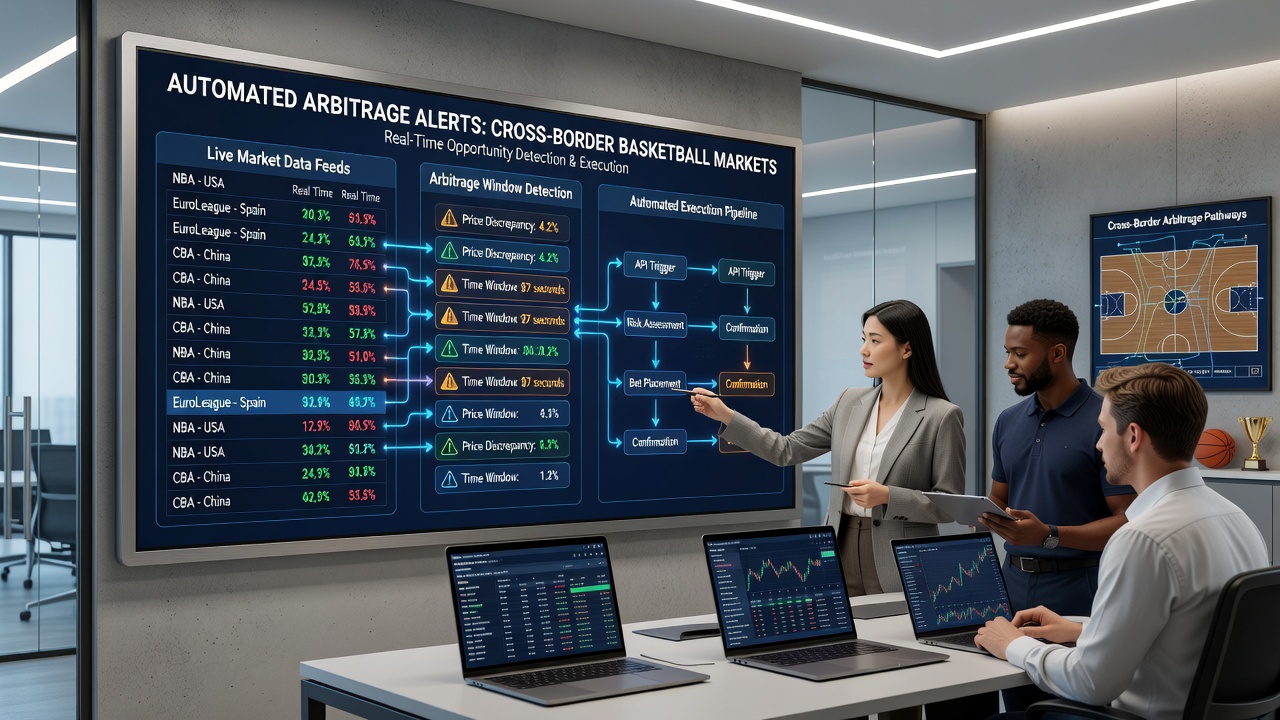
Developers first establish secure API connections with operators holding licenses in separate jurisdictions, ensuring compliance with data transfer rules that vary between the EU's General Data Protection Regulation and equivalent frameworks in Canada and Australia. Once feeds stabilize, code modules calculate arbitrage conditions using formulas that solve for stake distributions across opposing outcomes, then store historical window durations to refine future detection accuracy.
Integration of machine learning classifiers helps distinguish transient price movements from sustained opportunities, particularly during July 2026 when summer league and FIBA qualifiers increased cross-market activity. Observers note that these classifiers reduce false positives by analyzing patterns in line movement velocity across time zones.
Handling Currency and Regulatory Variables
Currency fluctuations introduce additional variables that automated systems must incorporate through real-time forex APIs, converting all potential returns into a base currency before triggering alerts. Regulatory updates effective in several markets during mid-2026 have required platforms to embed geofencing logic that prevents alerts from reaching users in restricted territories, while still allowing monitoring for informational purposes.
Industry reports from the European Gaming and Betting Association indicate that basketball arbitrage windows lasting longer than 45 seconds have decreased as more operators adopt unified pricing engines, yet cross-border differences persist in lower-profile leagues where liquidity gaps remain pronounced.
Testing and Validation Protocols
Validation protocols involve backtesting alert accuracy against archived odds databases covering multiple seasons of international basketball competitions. Teams running these tests compare flagged opportunities against actual settlement outcomes to measure slippage rates caused by delayed confirmations or stake limits imposed by certain operators.
One documented case involved a system monitoring NBA totals across US and Asian books that achieved a 94 percent capture rate during the 2025-2026 season after incorporating latency buffers calibrated to average API response times. Figures released by the National Council on Problem Gambling in the United States highlight parallel growth in automated monitoring tools among professional bettors seeking efficiency in multi-jurisdictional environments.
Scaling Considerations for Broader Deployment
Scaling alert systems requires robust server architectures capable of handling concurrent scans across dozens of basketball competitions simultaneously, including both major leagues and regional tournaments. Cloud-based solutions with distributed nodes reduce single-point failures, while redundant data sources mitigate outages at individual bookmaker endpoints.
Those who have studied deployment logs observe that peak load occurs during overlapping game windows, such as late-evening NBA tip-offs coinciding with morning EuroLeague games, necessitating dynamic resource allocation to maintain sub-second alert latency.
Conclusion
Automated alert systems for cross-border basketball arbitrage continue to evolve alongside regulatory and technological shifts in global wagering markets. Integration of synchronized data feeds, precise calculation engines, and jurisdiction-aware notification layers enables consistent identification of short-lived pricing discrepancies. Continued refinement through backtesting and regulatory compliance adjustments supports reliable operation as international basketball schedules expand.